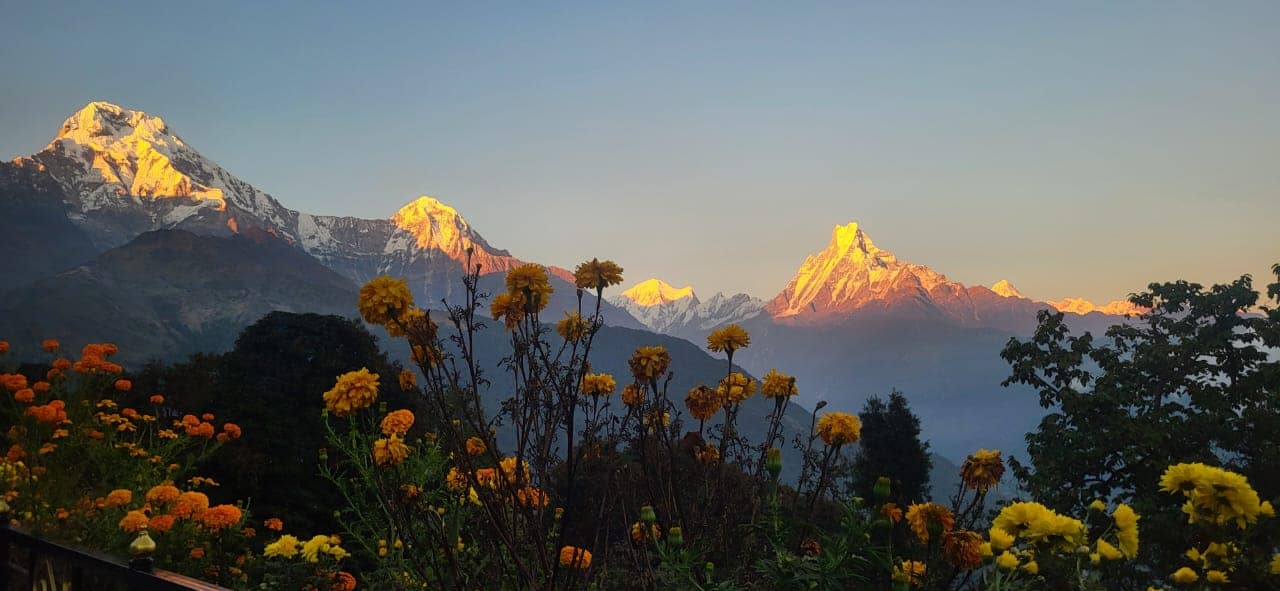



The Everest Base Camp Trek is widely regarded as one of the finest trekking experiences in the world. This classic 15-day journey leads you deep into the Khumbu region to the base of Mount Everest (8,848.86 meters), the highest peak on the planet. Along the way, trekkers encounter a powerful mix of dramatic mountain scenery, traditional Sherpa culture, and ever-changing landscapes. It is a journey that offers not only natural beauty, but also a strong sense of purpose and achievement.
The adventure begins with a scenic flight from Kathmandu to Lukla, a mountain airstrip set among steep hills and towering peaks. From here, the trail follows the Dudh Koshi River through a series of traditional villages connected by suspension bridges and forested paths. Early sections of the trek pass through green valleys filled with pine and rhododendron, while higher elevations reveal more rugged terrain and expansive mountain views.
Namche Bazaar is one of the most significant stops along the route. This vibrant mountain town serves as the main gateway to the Everest region and provides an important acclimatization break. Trekkers can enjoy clear views of Everest, Ama Dablam, and nearby peaks while exploring local markets, bakeries, and cultural sites. The journey continues to Tengboche, where the region’s most important monastery stands against a backdrop of towering mountains, offering both cultural insight and unforgettable scenery.
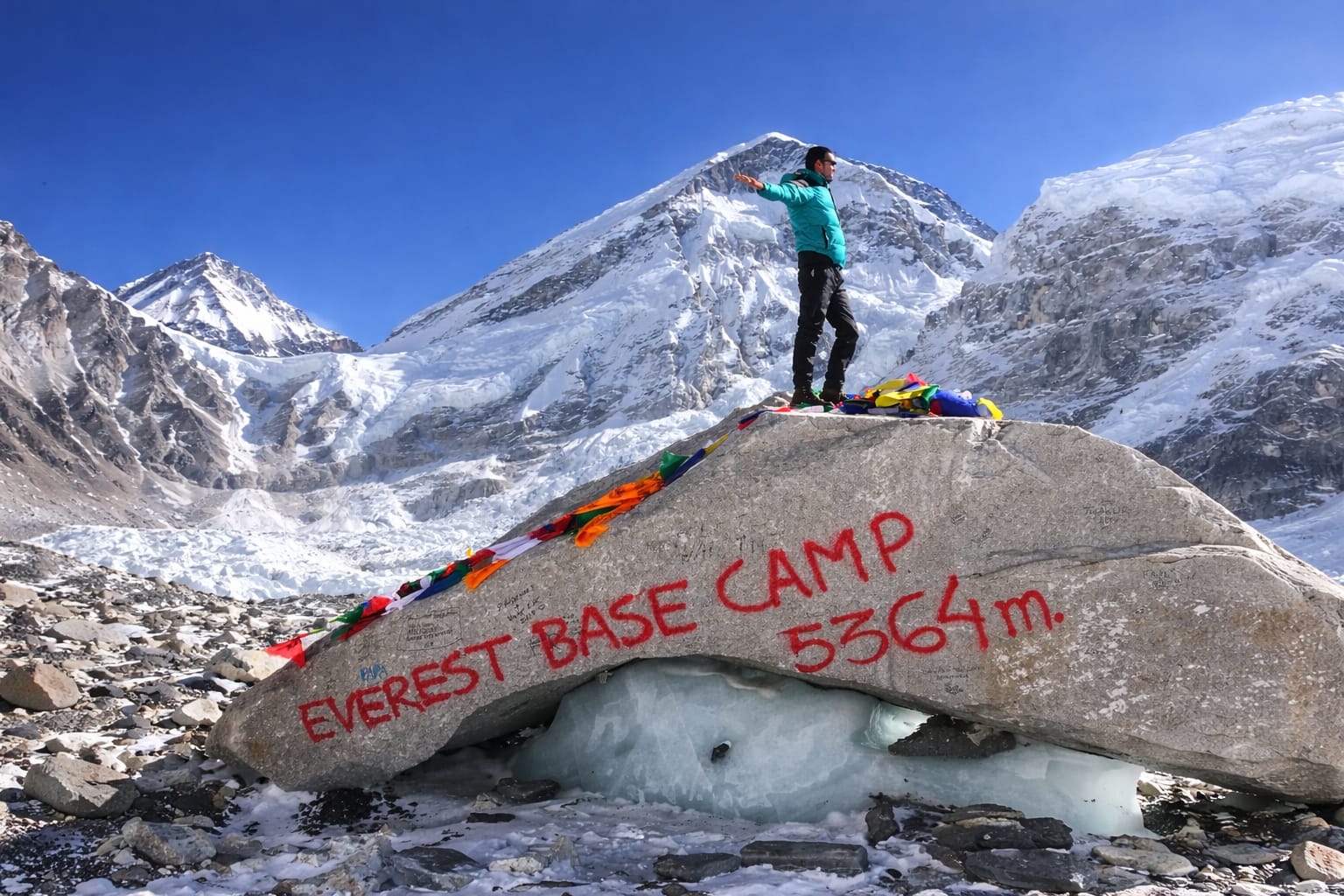
Beyond Tengboche, the trail climbs steadily through Dingboche and Lobuche, where the environment becomes more remote and alpine in character. These higher settlements play a key role in helping trekkers adjust safely to the altitude. The final approach leads to Gorakshep and then to Everest Base Camp (5,364 meters), the historic starting point for Everest expeditions. Standing here, surrounded by glaciers and immense peaks, is a moment that leaves a lasting impression.
A further highlight is the ascent of Kala Patthar (5,545 meters), a viewpoint known for its exceptional panorama of Everest. The early morning climb rewards trekkers with clear, close views of the mountain and a sunrise that illuminates the entire range. For many, this becomes one of the most memorable parts of the journey.
Throughout the trek, accommodation is provided in locally operated teahouses, where trekkers experience genuine hospitality and daily life in the mountains. The route also passes through Sagarmatha National Park, a protected area recognized for its natural and cultural importance. Its forests, wildlife, and mountain landscapes add depth and variety to the experience.
Although the Everest Base Camp Trek requires good physical condition and preparation, it does not involve technical climbing. With proper pacing and acclimatization, it is achievable for many trekkers. More than just a physical challenge, it is a journey that offers perspective, connection with nature, and a deep sense of accomplishment.
For those who have dreamed of walking in the shadow of Everest, this trek represents an extraordinary opportunity. It is not simply about reaching base camp, but about the experience of the journey itself and the memories created along the way.